Gamehaus Deal for Techforge Puts AI Microdrama Terms Under Scrutiny
Gamehaus announced $19.6 million in shares and a $7 million cash investment tied to Techforge. For performers and crews, consent, credit and pay remain open.
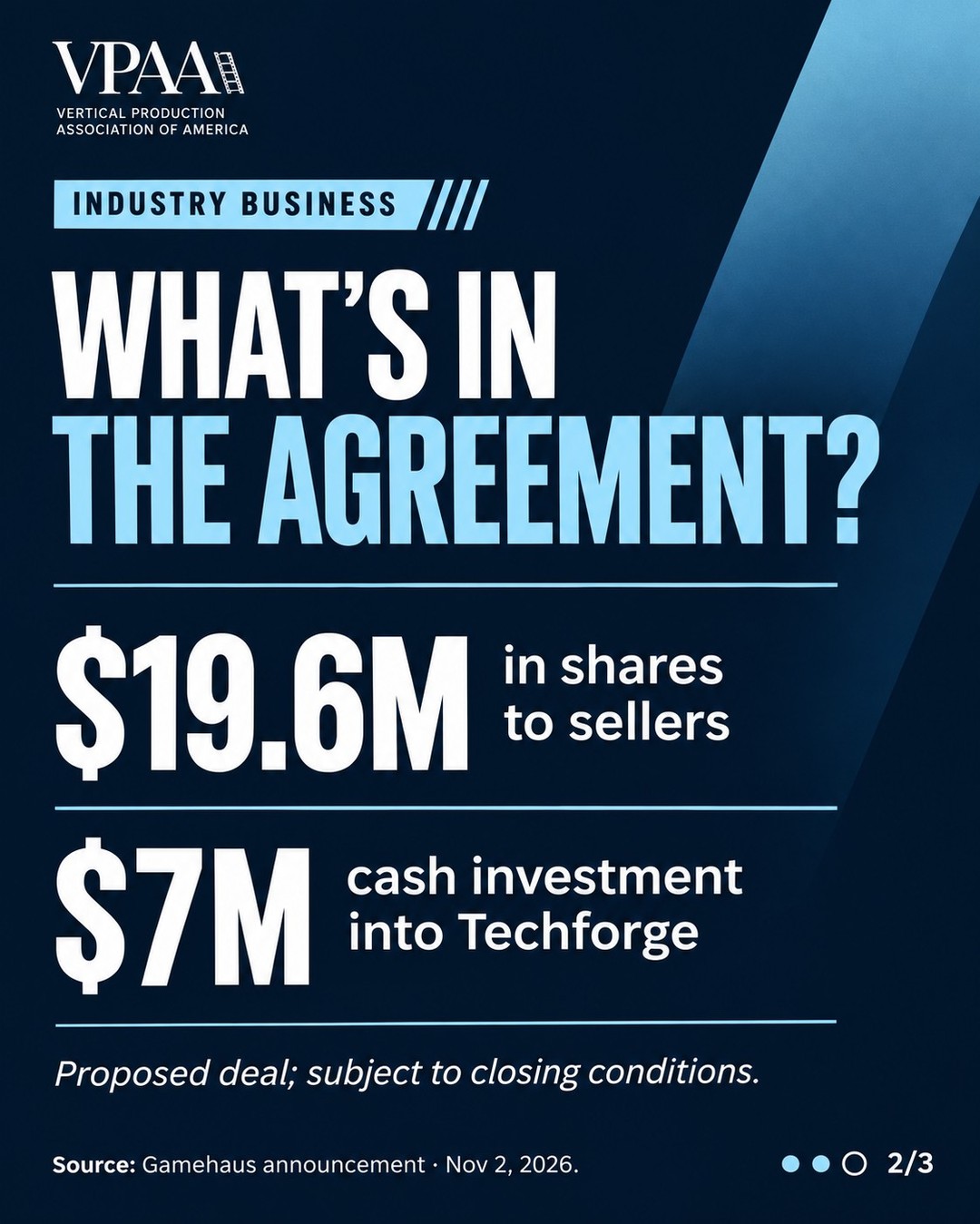
Gamehaus has announced an agreement involving $19.6 million in shares to sellers and a separate $7 million cash investment into Techforge, a transaction that adds to the investment attention now directed at AI-produced microdramas.
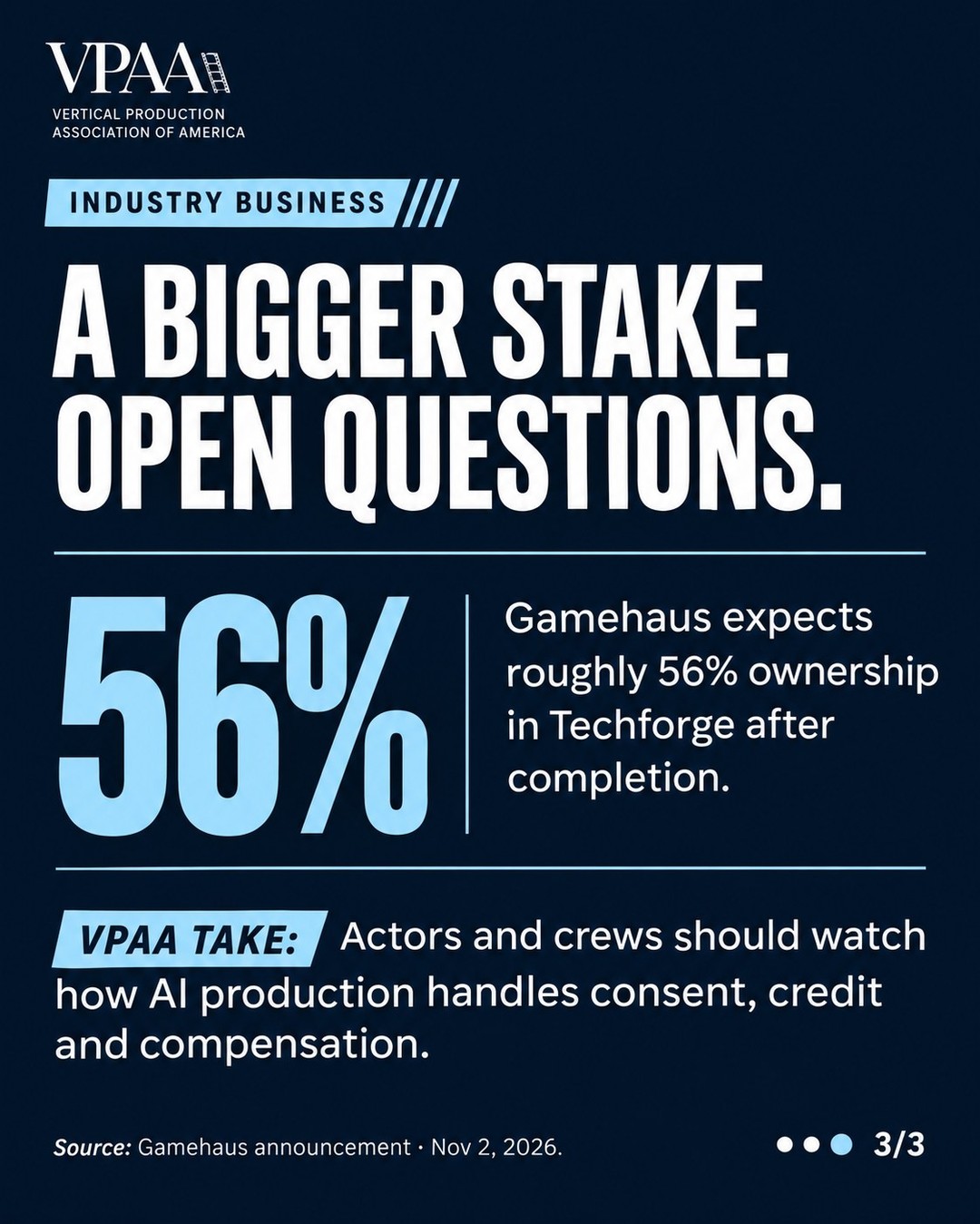
According to the company’s announcement, dated November 2, 2026, Gamehaus expects to hold approximately 56% ownership following completion. The announced transaction remains subject to closing conditions, and its final terms and timing depend on those conditions being met.
What the announcement says
The reported structure has two parts. One is a share component, valued at $19.6 million, going to sellers. The other is a $7 million cash investment into Techforge. Taken together with the expected ownership stake of roughly 56%, the announcement describes a deal in which Gamehaus would take a majority position if the transaction closes.
Because the agreement has not yet completed, the figures reflect what the company has announced and expects, not a finished outcome. Observers tracking the deal will want to watch for confirmation that closing conditions have been satisfied.
Why it matters to the vertical industry
Microdramas are a core part of the vertical-format market, and capital moving toward AI-driven production signals that investors see room for growth in how these series are made. For the wider vertical industry, each transaction of this kind sets expectations about the scale of financing available and the production models that capital will back.
The announcement itself is a financial one. It does not address how AI production in this segment will treat the people whose work and likeness are central to storytelling. That gap is where much of the conversation among actors and crews now sits.
The questions for talent
For performers and production teams, investment news raises practical questions beyond deal size. How will AI production handle consent when a performer’s image, voice or performance is involved? How will credit be assigned when AI tools contribute to a finished series? And how will compensation be determined when production methods change?
None of these questions are answered by the deal terms announced so far, and nothing in the announcement suggests the parties have set out positions on them. They are, however, the issues that determine whether growth in AI microdrama production is also sustainable for the people who work in it.
The association’s view
The Vertical Production Association of America holds that growth in the format and protections for talent should advance together. As financing flows into AI production, the association encourages production companies to put clear, written terms in front of performers and crews before work begins. Those terms should cover informed consent, accurate credit and transparent compensation.
Clear standards of this kind give investors, producers and talent a shared baseline. The VPAA will continue to follow developments in this transaction and in the broader AI microdrama market, and invites members to share which issues they believe production companies should address first.