DramaWave Writers Organize With the Writers Guild of America
Twenty-seven DramaWave writers have organized with the WGA after a card check and voluntary recognition. Contract talks are next, with no bargaining dates set.
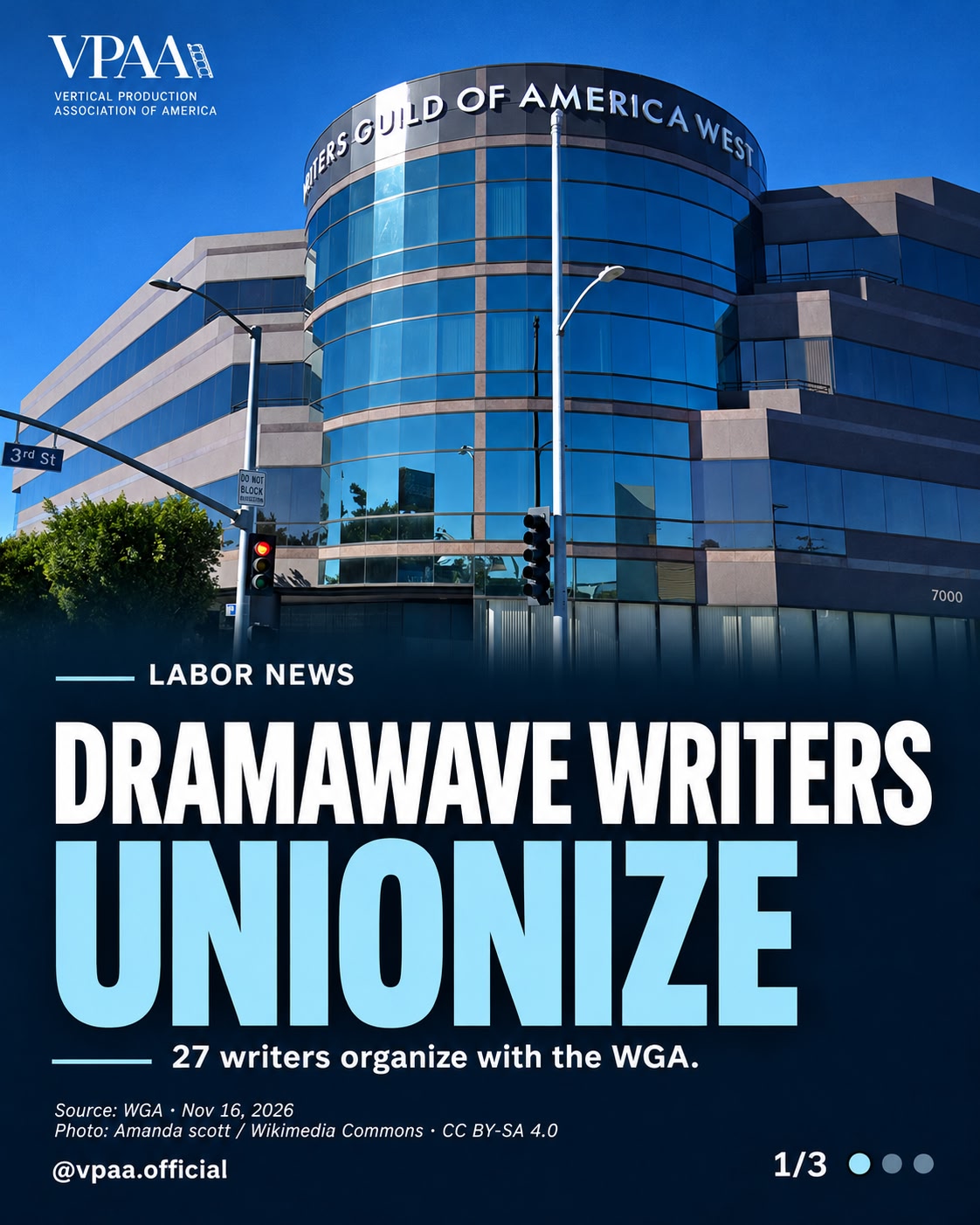
Writers at the microdrama platform DramaWave have organized with the Writers Guild of America, a milestone for labor in vertical entertainment. According to the WGA’s November 16 announcement, the company’s 27 writers took the step following a successful card check and voluntary recognition by the company.
The development marks a notable moment for a format that has grown quickly and is still defining its working norms.
What the Writers Are Seeking
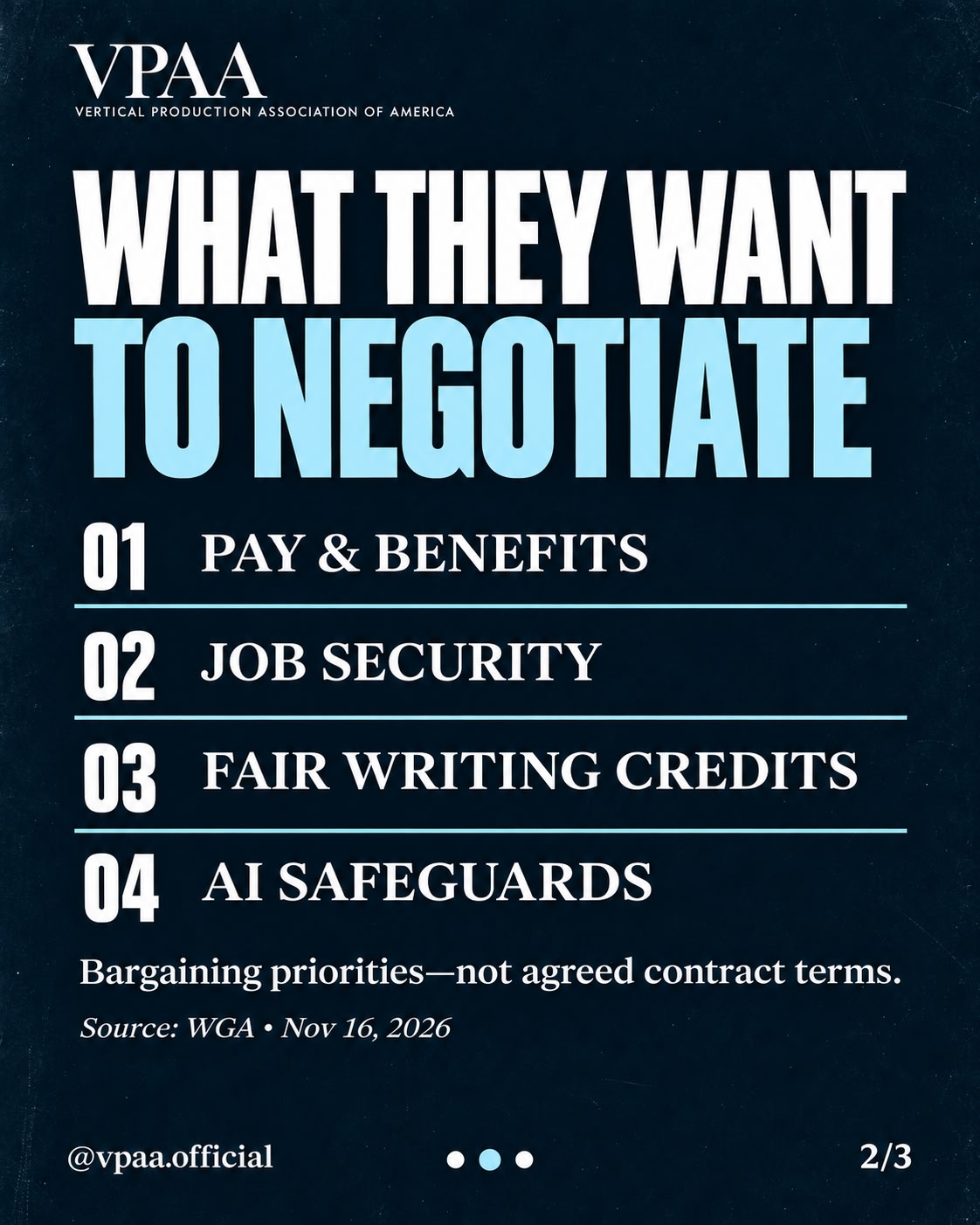
The announcement lists four priorities for the newly organized group:
- Compensation and benefits
- Job security
- Fair writing credits
- Safeguards around AI in writing
Together, the list reflects questions that extend well beyond a single company. Pay structures, credit practices and the role of generative tools in the writers’ room are issues that any production operation in the format will face as volume and investment increase.
How Recognition Happened
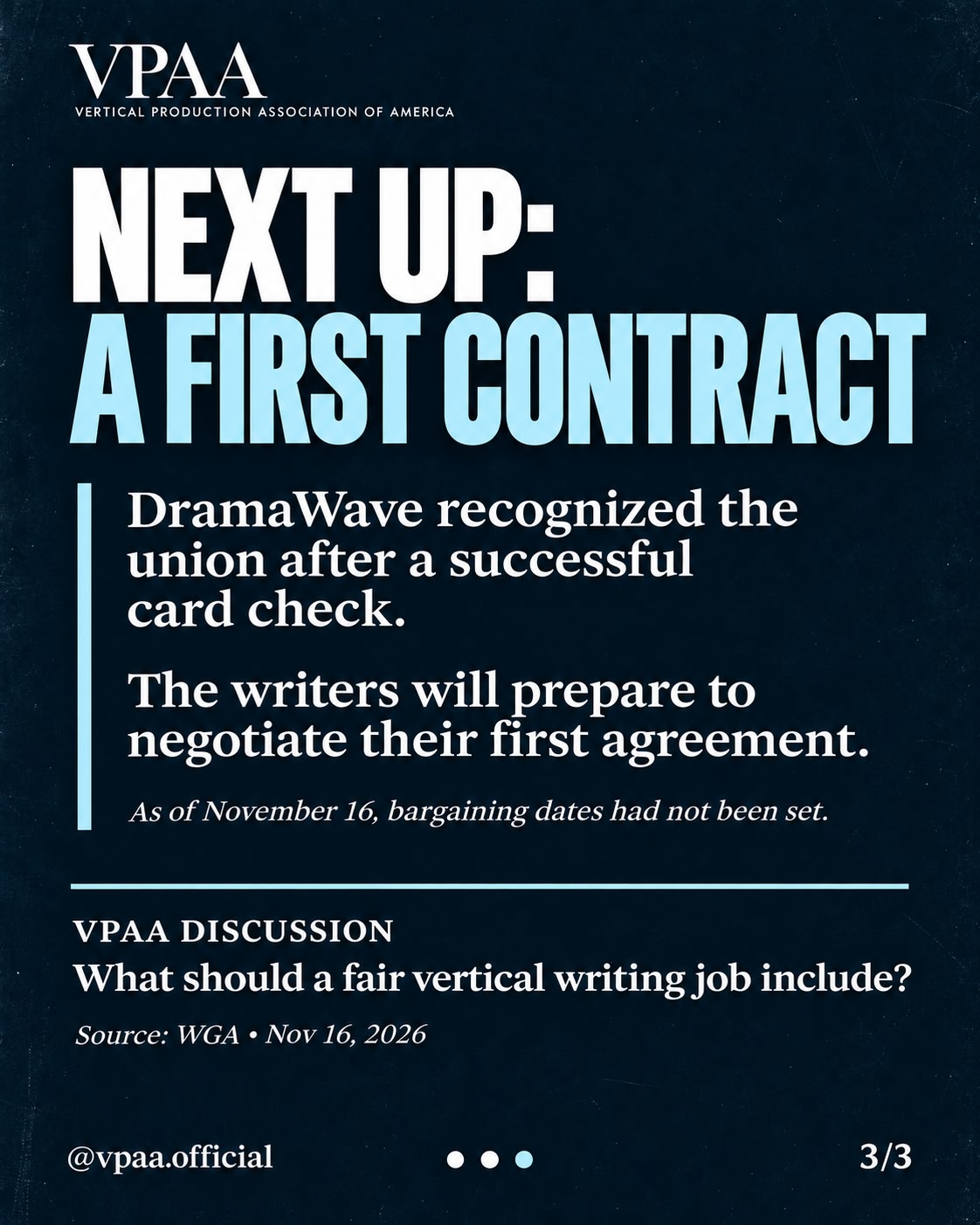
The writers organized through a card check, a process in which a majority of eligible employees sign cards stating they want union representation. The WGA reports that DramaWave then voluntarily recognized the group. In practice, that means the company accepted the result without requiring a separate election.
What Comes Next
The next stage is preparing to negotiate a first contract. As of the November 16 announcement, bargaining dates had not been set. The terms the writers eventually secure, and the timeline for reaching them, remain to be seen.
Why It Matters for Vertical Production
Microdramas are written, produced and released at a pace that differs from traditional episodic television. That speed makes clear expectations around writing work more important, not less. Questions about how writers are paid, how their work is credited and how AI tools may be used in the creative process are likely to shape how the format matures.
This is also one of the first labor developments of its kind to be publicly reported at a dedicated microdrama platform, and other producers and platforms will be watching how it unfolds.
The Association’s View
The Vertical Production Association of America supports the growth of vertical-format storytelling on the basis of strong production standards, rate transparency and meaningful protections for creative talent. Fair credit practices and clear rules around the use of AI in writing are consistent with those goals. As the format expands, the association encourages open discussion across the industry about what a fair writing job should include, from compensation to credit to the responsible use of new technology.
The VPAA will continue to follow developments as DramaWave and its writers move toward negotiations.
Source: Writers Guild of America, November 16, 2026.