When Does Dark Romance Start Normalizing Abuse?
Vertical drama thrives on obsession and jealousy. When control is presented as proof of love, the line between romance and manipulation gets harder to see.
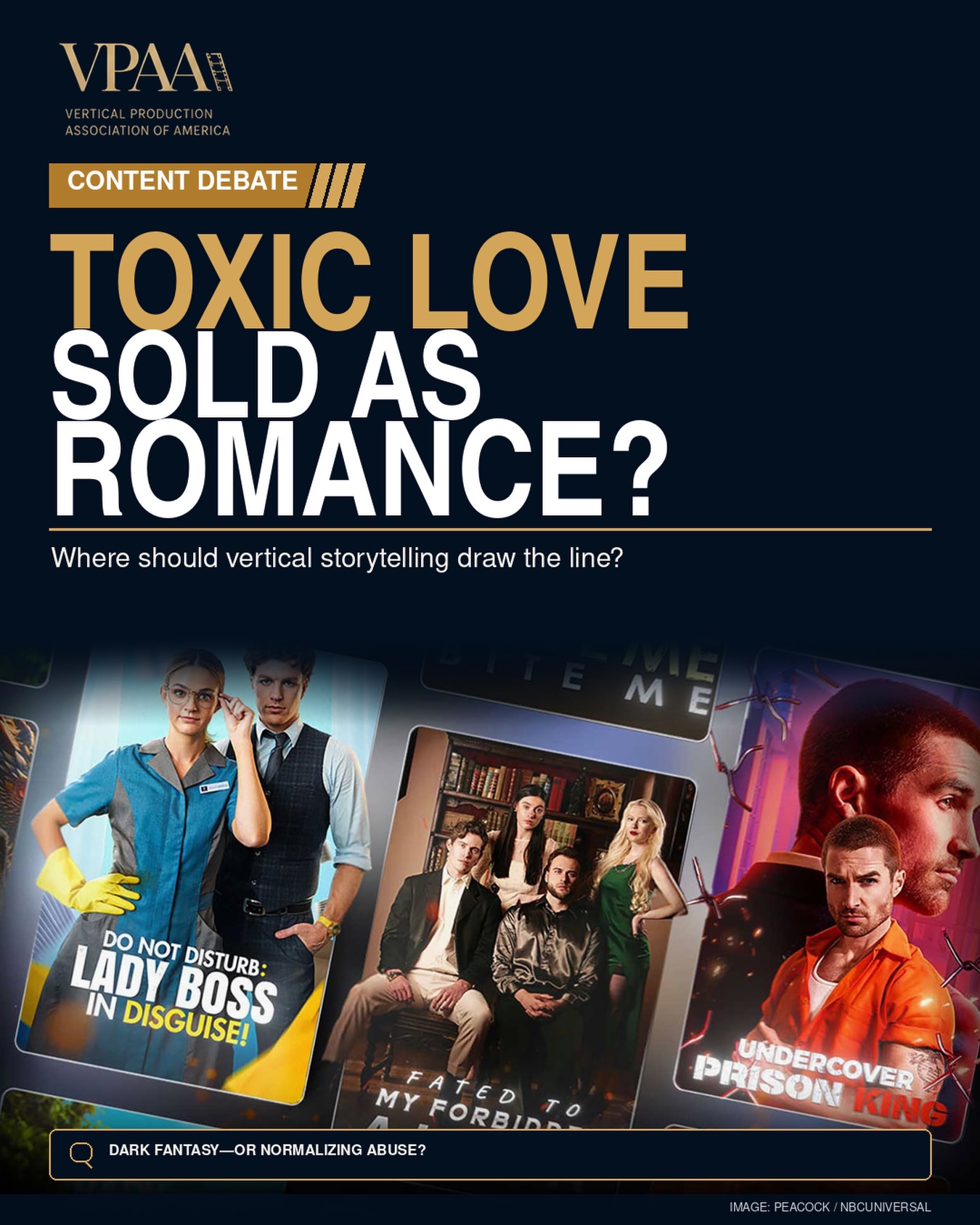
Vertical drama thrives on obsession, betrayal and complicated relationships. That is not a flaw; it is the genre.
But when control, coercion and extreme jealousy are presented as proof of love, does dark fantasy begin normalizing abuse?
The genre’s dilemma
Dark romance is one of the format’s most reliable performers. Its appeal is the fantasy of being wanted so intensely that the rules bend. The trouble is that the behaviors that signal intensity on screen, surveillance, isolation, possessiveness, are the same behaviors that signal danger off it.
Stories do not need perfect relationships. Nobody is asking for that. The question is whether they should make the difference between romance and manipulation clearer, so that an audience of mostly young women leaves an episode knowing which one they watched.
Where to draw the line
The association does not propose banning a genre that audiences clearly want. It proposes that platforms and writers own the distinction:
- Controlling behavior can drive a plot without being rewarded by the ending.
- A character who isolates a partner can be the antagonist of a romance, not its hero.
- Jealousy can be a flaw the story examines rather than a virtue it celebrates.
Where would you draw the line? The association’s standards work treats this as an editorial question for every platform, and encourages platforms to state their answer publicly, as some have begun to do.