What Counts as a View? Vertical Needs One Measurement Standard
Autoplay, three seconds, a completed episode, or a paid impression. When view counts shape casting and pay, talent deserves transparent, consistent reporting.
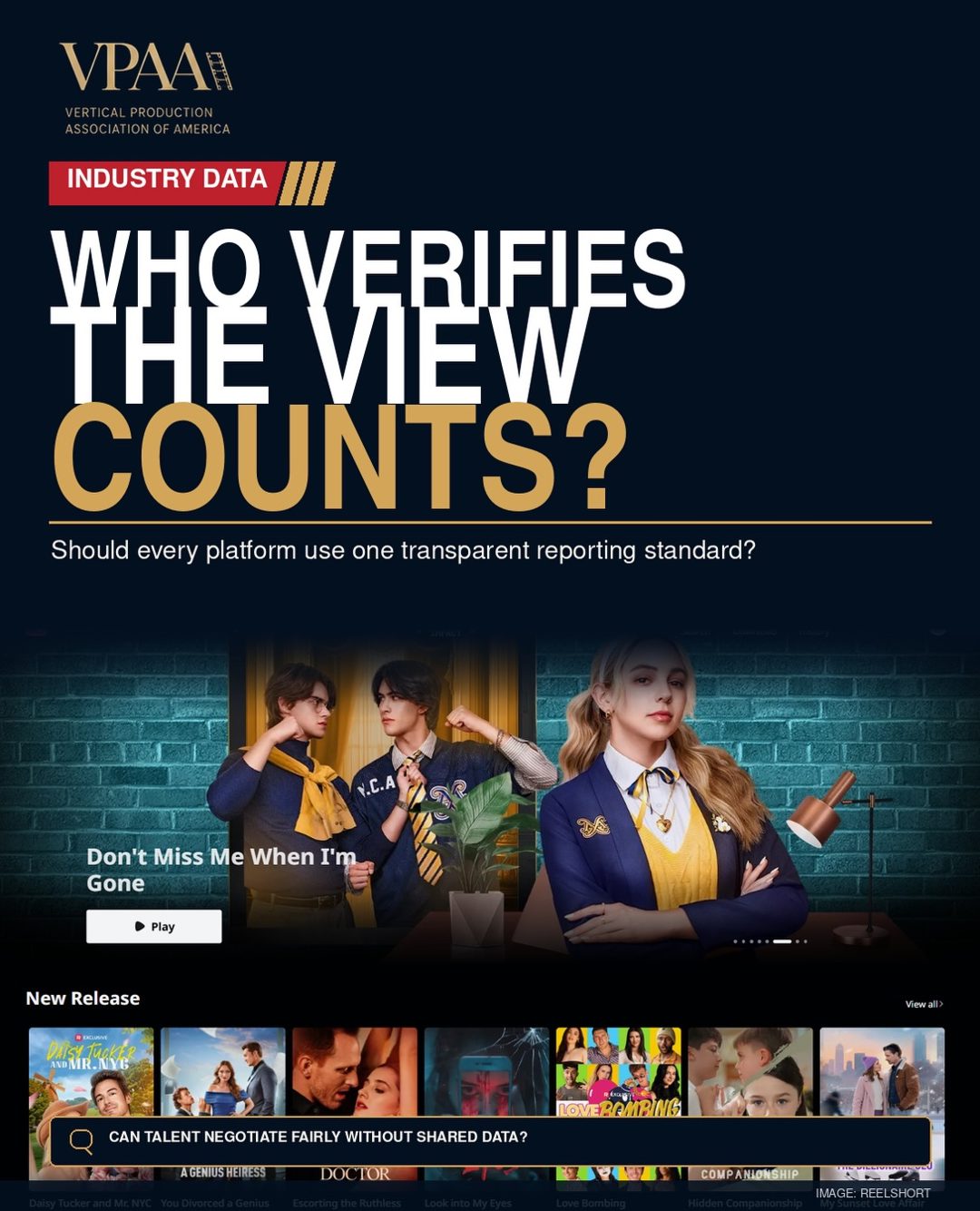
“Millions of views” sounds impressive. But what actually counts as a view?
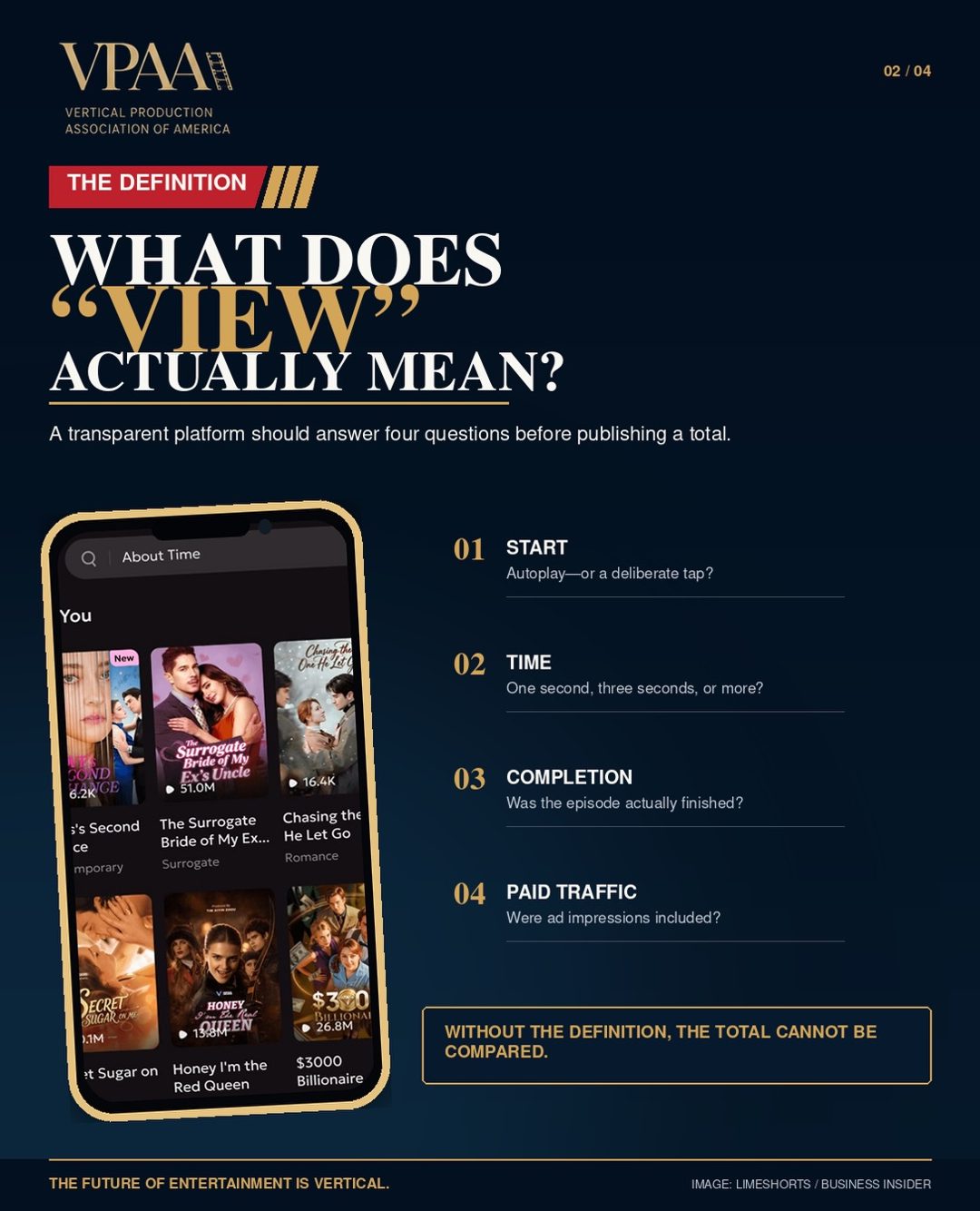
An autoplay? Three seconds watched? A completed episode? Paid advertising impressions? Every platform answers differently, and most do not publish the answer at all.
Why the definition matters
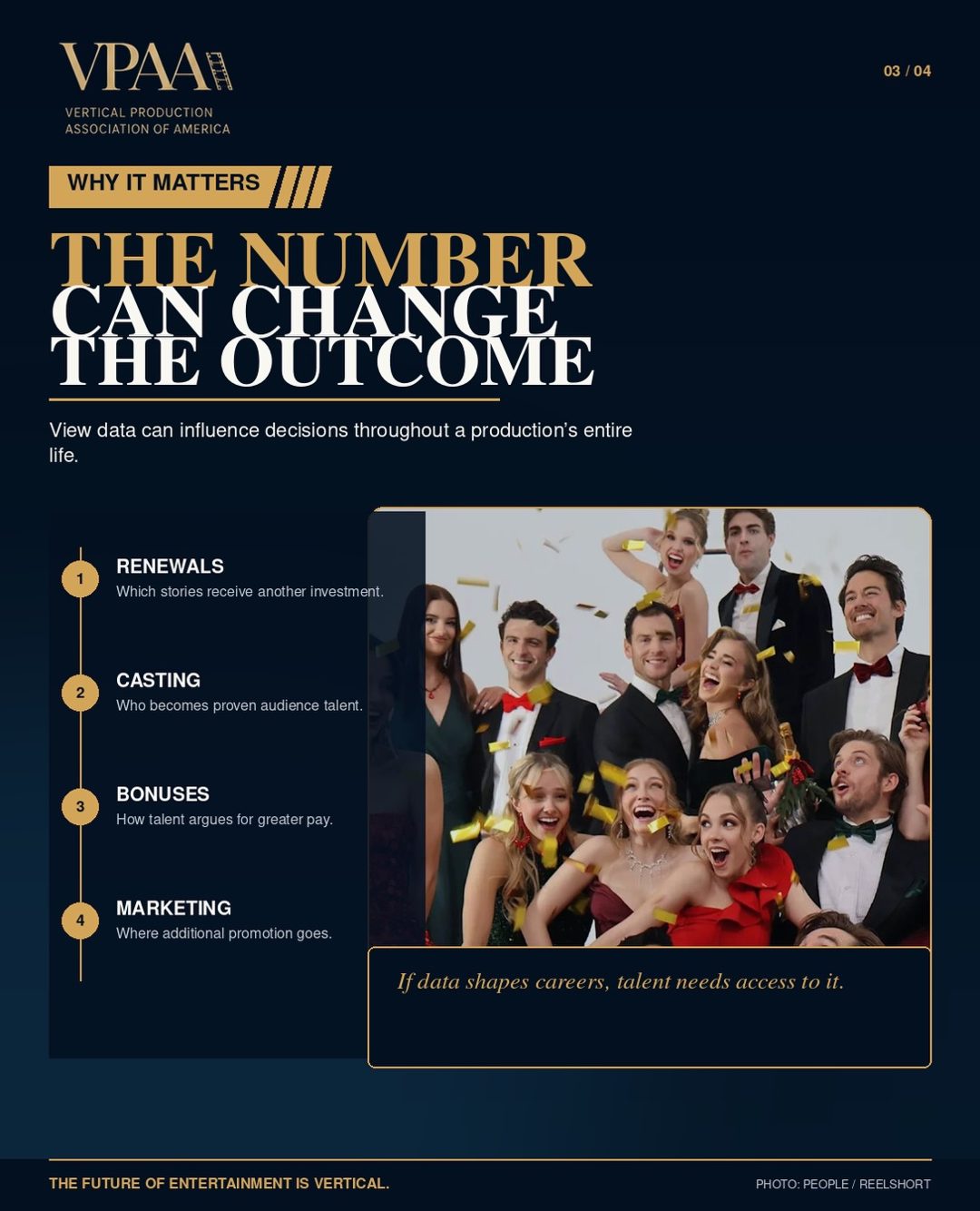
In vertical drama, view counts are not just a vanity metric. They influence who gets cast next, what a lead can ask for, and which performers platforms promote. A number that means one thing on ReelShort and something else on DramaBox is not a number anyone can negotiate with.
The traditional industry fought this fight already. Nielsen ratings, for all their flaws, gave every network and every talent representative the same scoreboard. Vertical has no equivalent, and the gap is being filled by platform marketing departments.
What the association is proposing
If view counts influence casting, compensation and career opportunities, talent deserves transparent and consistent reporting. VPAA proposes an industry-wide measurement standard with three elements:
- A published definition of a view, including the minimum watch time.
- Separation of organic and paid impressions in any public figure.
- Per-title reporting available to the credited cast on request.
Should vertical platforms adopt one industry-wide measurement standard? The association believes the platforms that do will find it easier to attract the talent they are competing for.