California Requires Disclosure of AI Performers in Ads. Is Disclosure Enough?
Governor Newsom signed SB 1050, requiring disclosure when video and audio ads use AI-generated performers. For vertical, the bigger question is how actors' faces are protected.
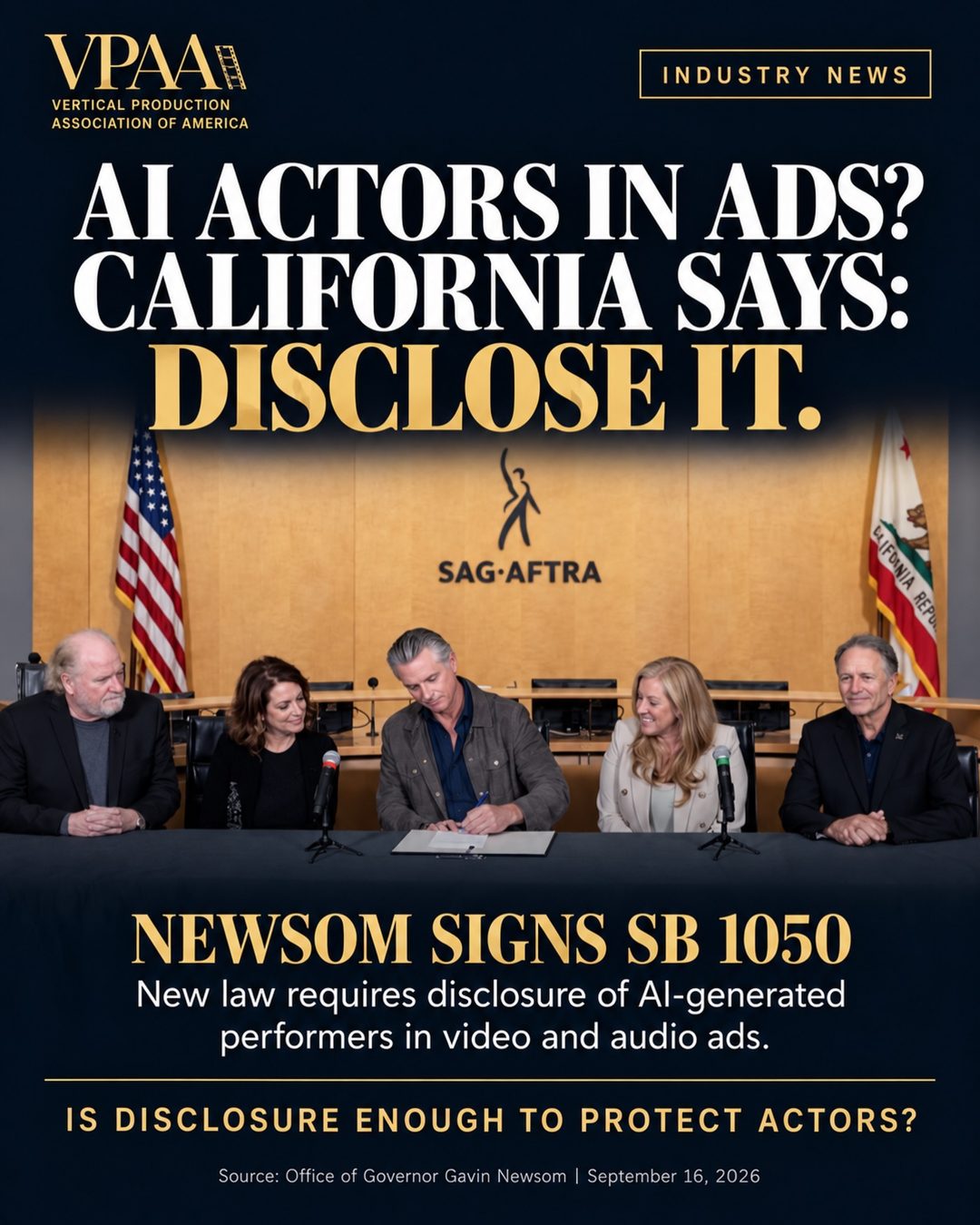
If the performer selling you something is AI-generated, should you have to be told? California has answered yes.
Governor Newsom has signed SB 1050, which requires disclosure when video and audio advertisements use AI-generated performers to sell products or services. It is one of the first laws in the country to address synthetic performers in commercial content directly.
What the law covers
The bill targets advertising, not entertainment. A vertical series that uses an AI-generated character is not covered. An ad for that series that uses an AI-generated spokesperson is. The distinction matters because vertical platforms are heavy advertisers, and the ads that drive app installs are exactly where synthetic performers are cheapest to deploy.
The question for vertical
For the vertical industry, SB 1050 raises a bigger question than disclosure: how do we protect the actors whose work, and faces, help sell these stories?
The format’s recent history includes cases of actors’ likenesses appearing in promotional material for scenes they never filmed. Disclosure that a performer is AI-generated does not help an actor whose real face has been used to generate it.
Is disclosure enough?
The association’s view is that disclosure is a floor, not a ceiling. Protections should go further:
- Every vertical contract should include a separate, specific clause on AI use of likeness.
- Promotional use of an actor’s image should require the same consent as the production itself.
- Platforms should publish their policy on synthetic performers.
California has moved first on the advertising side. The industry can move on the rest without waiting for a second bill.