Turkish Microdramas Gain New Distribution Routes Across the Americas
Inter Medya's expansion includes ViX, Canal 2 in El Salvador and Ditu in Colombia, FormatBiz reports. Localization now shapes how short-form stories travel.


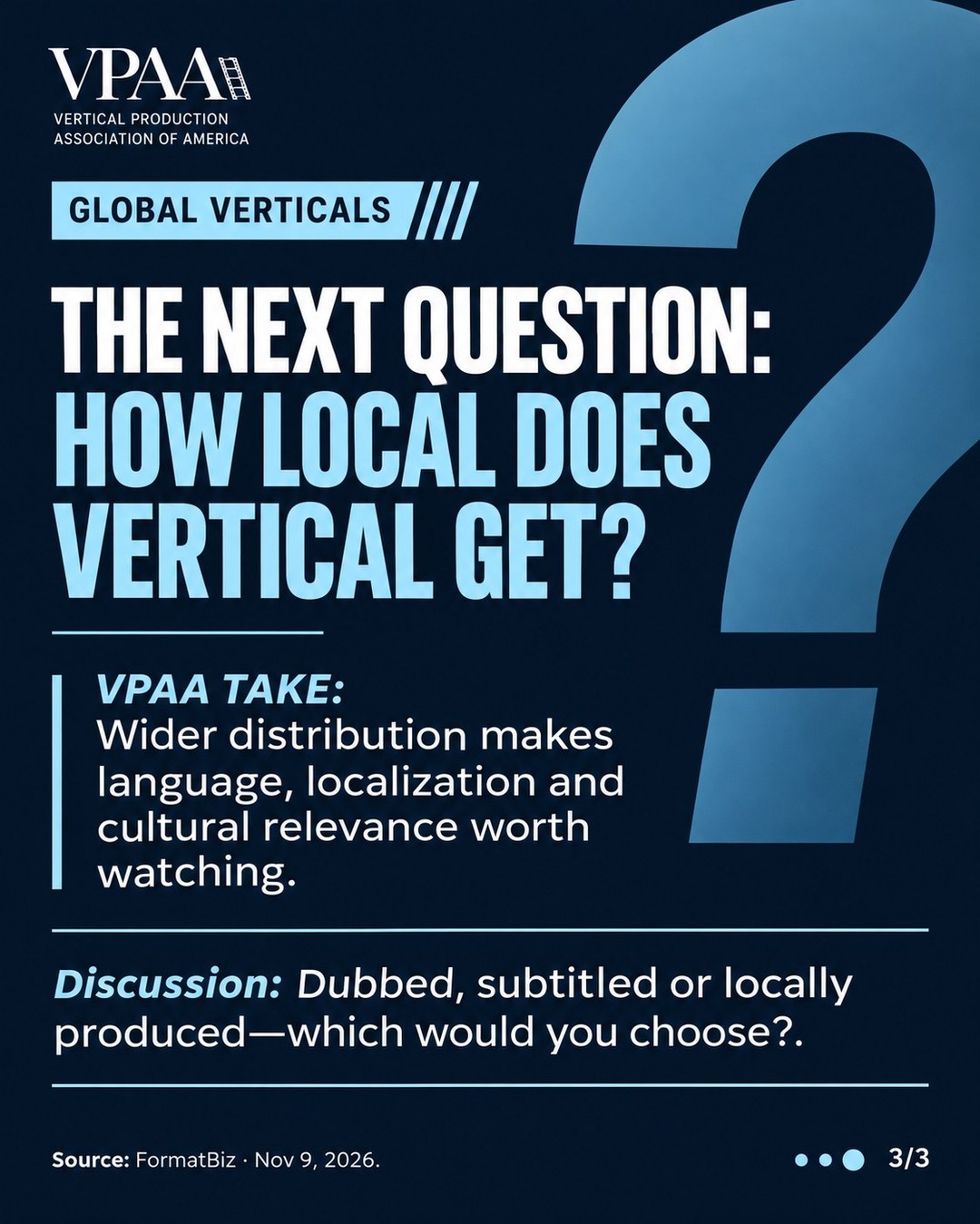
Turkish microdramas are opening new distribution routes across the Americas, as Inter Medya extends its reach to additional broadcasters and platforms in the region. According to FormatBiz, the expansion includes ViX, Canal 2 in El Salvador and Ditu in Colombia.
The report, published November 9, 2026, points to a broader pattern in short-form storytelling: series built for compact, serialized viewing are moving across borders and finding audiences well beyond their markets of origin.
What the expansion covers
Per FormatBiz, Inter Medya’s expansion across the Americas spans three named outlets: ViX, Canal 2 in El Salvador and Ditu in Colombia. The list shows distribution reaching more than one country and more than one kind of outlet in the region.
The reported information does not detail titles, release schedules or commercial terms, and those points should be confirmed with the companies involved. What the report does establish is the direction of travel: Turkish microdramas are being placed with new partners in the Americas.
Why localization matters
When short-form stories cross borders, the question of how they reach viewers becomes as important as where they are carried. Language, cultural context and the way audiences connect with the characters all shape whether a series resonates in a new market.
Producers and distributors typically weigh several approaches: dubbing a series into the local language, offering subtitles, or commissioning a locally produced adaptation. Each involves different costs, timelines and creative decisions, and each changes the viewing experience. Audience preference between dubbed, subtitled and adapted versions remains an open question, and one that matters to anyone planning international releases.
For vertical-format producers, the lesson is practical. A series designed for the phone screen has to be built with export in mind from the start. Framing, on-screen text, pacing and dialogue all affect how readily a story can be localized without losing what made it work.
The association’s view
The VPAA follows cross-border distribution closely because it bears directly on the growth of the vertical format. As more series travel between markets, the standards behind them matter more: clear production practices, credited and verified creative teams, and fair treatment of the talent whose work is being adapted, dubbed or subtitled for new audiences.
Distribution deals like those described by FormatBiz show that demand for short-form storytelling is not confined to a single region or language. The association encourages producers entering new territories to treat localization as a creative and professional discipline, with the same attention to quality that they bring to the original production.
As the format continues to expand across the Americas and beyond, the choices made about language and adaptation will help determine how audiences in each market come to know it.