AI and Vertical Are Merging Faster Than Hollywood Expected
As studios race to lower costs and increase output, many insiders believe AI-generated vertical storytelling could become one of the industry's biggest disruptions. The association is less sure.
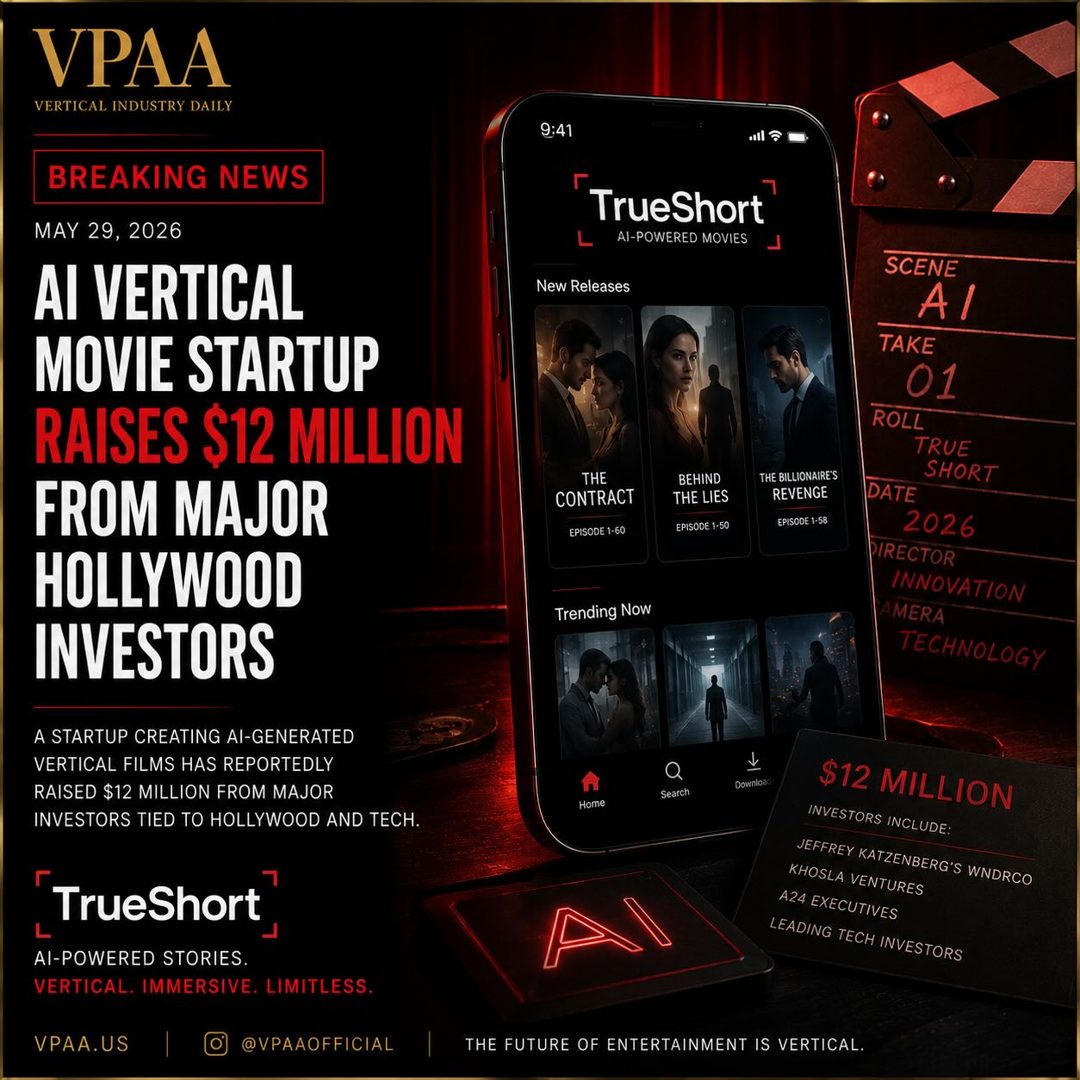
AI and vertical entertainment are beginning to merge faster than Hollywood expected.
As studios race to lower production costs and increase content output, many insiders believe AI-generated vertical storytelling could become one of the industry’s biggest disruptions over the next few years. Several platforms have begun building offerings around synthetic series.
The case the insiders make
The format’s economics are already extreme: a full season in a week, episodes measured in minutes, libraries measured in thousands of titles. Generative tools promise to remove the last expensive inputs, the cast and the crew. For a platform that lives on volume, the appeal is obvious.
The case against
The association’s reporting in the months after this post pointed the other way. Platforms that experimented heavily with AI-generated series found that viewers did not convert to paying subscribers at anything like the rate they did for human-led titles. Several have quietly increased live-action investment again.
The reason is the one the format’s own success suggests. Vertical drama works because the viewer forms an attachment to a face and wants to see what happens to it. That attachment is the product. Generated faces have not, so far, earned it.
Where it lands
AI will remain a tool inside vertical production: for pre-visualization, for editing, for marketing cuts. As a replacement for the performer, the early evidence says audiences are not buying. The association’s standards treat the use of synthetic performers as a disclosure and consent matter, and its view on the business question is that the disruption, for now, is smaller than the hype.